

The Simple Distinction Most Spec Sheets Skip
Open any vehicle brochure and you'll find two performance figures listed prominently: torque (measured in pound-feet, or lb-ft) and horsepower (hp). They're often treated as interchangeable proxies for performance. They're not.
Think of it this way: torque is the force, and horsepower is how fast that force gets applied. A useful analogy is tightening a bolt with a wrench. The twist you apply to the wrench is torque. How many times you can crank that wrench per minute — the sustained rate of work — is closer to what horsepower measures.
This distinction has real consequences for how a vehicle behaves. Two cars with identical horsepower ratings but different torque curves can feel completely different to drive.
“Torque is what you feel pushing you back in the seat when the light turns green. Horsepower is what keeps pushing you when you're already moving fast.”
— Carroll Smith, Motorsport engineer and author of engineering guides for racing drivers
Torque: The Feeling You Notice First
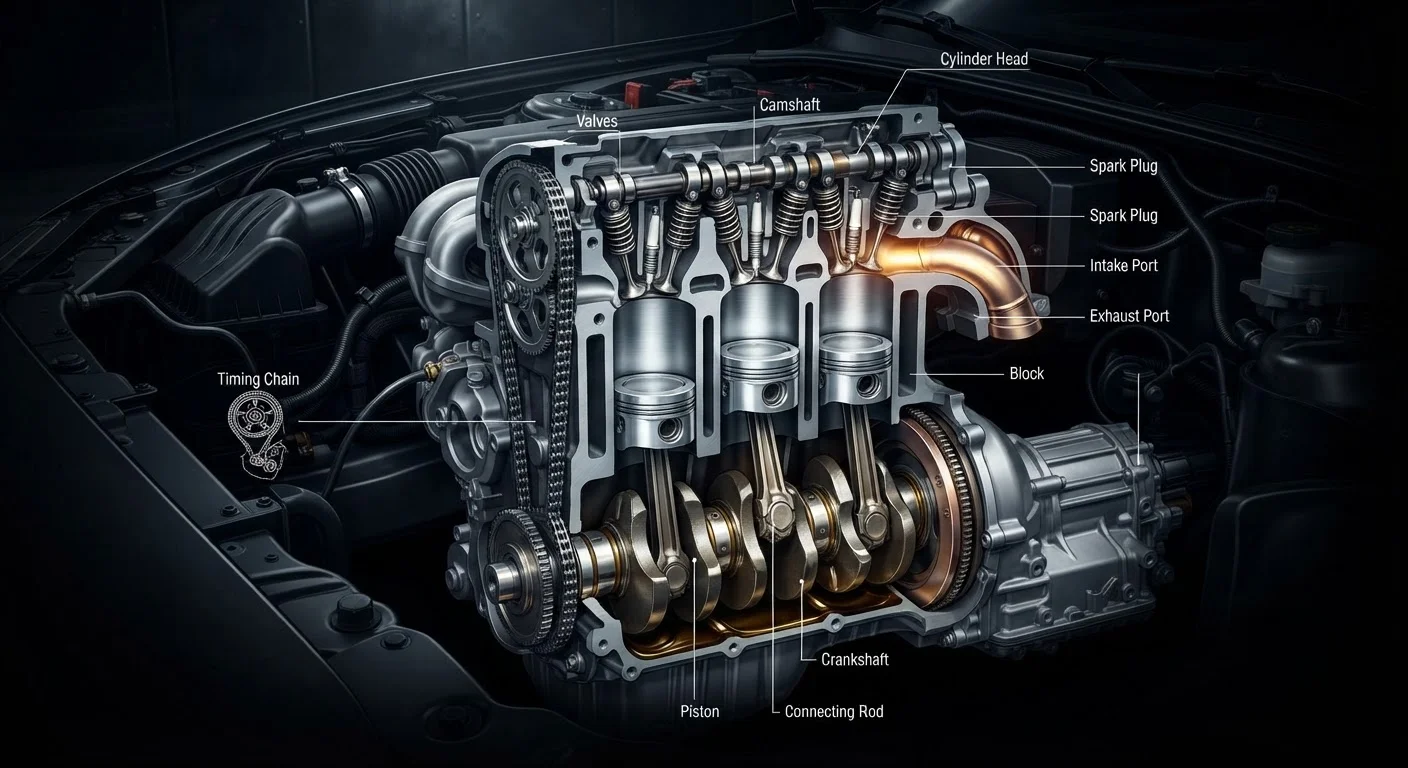
Torque is the rotational force generated by the engine's crankshaft. When you press the accelerator from a stop or ask the engine to pull a trailer uphill, torque is the measurement that tells you how much muscle is available to do that work.
Torque is listed alongside the RPM at which it peaks. A spec sheet reading 300 lb-ft @ 2,000 RPM tells you the engine reaches its maximum pulling force relatively early in the rev range — before you've even reached highway speeds. That's accessible, usable power for everyday situations.
This is why trucks and SUVs designed for towing emphasize torque. It's also why diesel engines — which typically produce peak torque at lower RPM than equivalent gasoline engines — have long been favored for commercial and heavy-duty applications. For a broader look at how different fuel types shape this output, see how each powertrain generates and delivers power.
5,252 RPM
RPM where torque and horsepower are always equal
This is a mathematical constant derived from the horsepower formula (Torque × RPM ÷ 5,252), applicable to any internal combustion engine.
15–20%
Typical drivetrain power loss from engine to wheels
Energy absorbed by the transmission, driveshaft, and differential means wheel horsepower is always lower than the manufacturer's engine-output figure.
0 RPM
RPM at which electric motors reach peak torque
Unlike combustion engines, electric motors produce their maximum rotational force immediately from a standstill, requiring no engine speed buildup.
Horsepower: The Number That Defines Top-End Performance
Horsepower quantifies work done over time — specifically, how rapidly an engine can sustain its torque output as RPM climbs. The formula connecting the two is fixed: horsepower equals torque multiplied by RPM, divided by 5,252. This is why a high-revving sports car engine can claim impressive horsepower figures even if its peak torque number seems modest.
Where you feel horsepower most is at higher speeds — highway passing power, sustained acceleration above 60 mph, and track-style driving. An engine that produces its power high in the rev range will feel sluggish at city speeds but come alive when pushed hard.
Horsepower figures in manufacturer specifications are typically measured as SAE net horsepower — taken at the engine output before drivetrain losses. What reaches the wheels is always somewhat less, typically 15–20% lower, due to energy absorbed by the transmission, differential, and other drivetrain components. Understanding how your transmission manages that power delivery is also relevant — automatic and manual gearboxes handle the power band differently.
Why This Matters When Evaluating a Vehicle
Knowing the difference helps you read specification sheets with more nuance. A compact crossover rated at 250 hp but with peak torque arriving above 5,000 RPM will feel less effortlessly powerful around town than one rated at 220 hp with 295 lb-ft available from 1,750 RPM.
Read the RPM alongside the number
A torque or horsepower figure alone tells only part of the story. Always check the RPM at which each peak is achieved. A vehicle with peak torque at 1,800 RPM will feel far more responsive in everyday traffic than one where that same peak isn't reached until 4,500 RPM.
Electric vehicles make this especially clear. An electric motor produces its maximum torque from zero RPM — no buildup required. This is why EVs feel so immediate off the line, even when their total horsepower figures don't appear exceptional on paper.
For drivers who tow, haul cargo, or frequently drive in hilly terrain, prioritizing torque — particularly peak torque delivered low in the RPM range — will have a more direct impact on daily usability than chasing headline horsepower numbers.
Frequently Asked Questions
For most everyday driving — merging onto highways, climbing hills, or hauling loads — torque is what you feel most directly. It determines how effortlessly a vehicle responds when you press the accelerator at low to moderate speeds. Horsepower matters more as vehicle speed increases.
Diesel engines use higher compression ratios and ignite fuel differently than gasoline engines, which generates greater rotational force at lower engine speeds. This makes them especially effective for towing, hauling, and sustained low-speed work.
Electric motors deliver their maximum torque immediately from zero RPM, which is why EVs feel so responsive off the line. Many electric vehicles produce torque figures that would be exceptional even in high-performance combustion engines.
It means the engine reaches its maximum pulling force early in the rev range, before the engine is spinning fast. This translates to strong, accessible power in everyday driving without needing to rev the engine hard.
Manufacturer horsepower ratings are measured at the engine (brake horsepower or SAE net horsepower) under controlled conditions. Real-world output at the wheels is lower due to drivetrain losses, typically 15–20% depending on the transmission and drivetrain layout.
The content on this site is for informational purposes only and is not a substitute for professional advice. Always consult a qualified professional for guidance specific to your situation.