

Why Cities Are Harder Than They Look
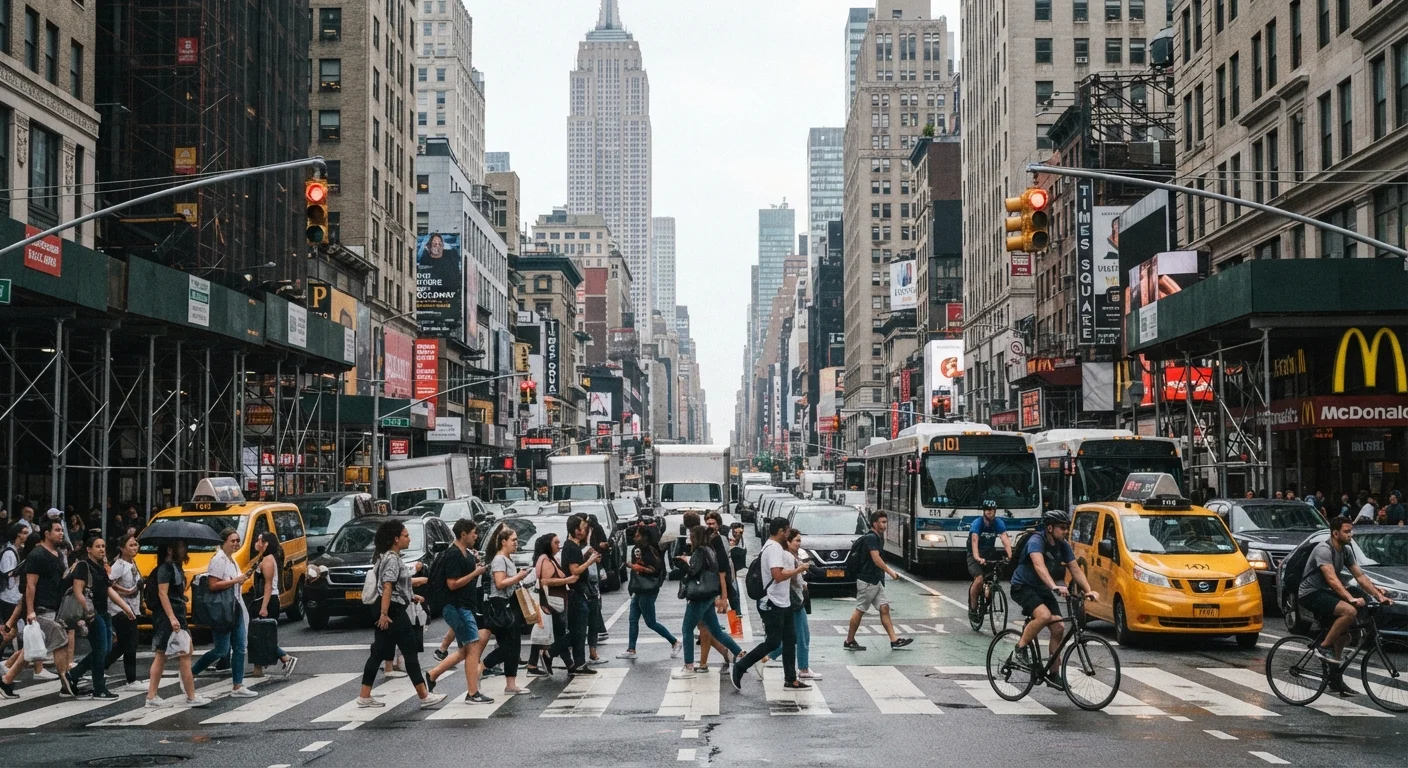
Urban driving can feel deceptively routine. Speeds are lower, distances are shorter, and the road network is often well-marked. Yet city and town environments consistently produce a high volume of collisions — particularly involving vulnerable road users. The reason is density: more vehicles, cyclists, pedestrians, delivery vehicles, and unpredictable events per square mile than any rural or motorway setting.
This isn't just about inexperienced drivers. Even seasoned commuters develop blind spots — habitual routes where attention drifts precisely because the road feels familiar. Understanding the specific hazards that urban driving throws up is the first step toward responding to them confidently. For a broader look at the mindset behind that kind of prepared driving, see our guide on defensive versus reactive driving.
Cyclists in Your Blind Spots
Cyclists travel faster than pedestrians but are far narrower than cars, making them easy to miss in door mirrors and at junctions. The most dangerous moment is a left turn (or right turn in left-hand-traffic regions) when a cyclist may be travelling straight through alongside you. Always check your nearside mirror immediately before turning, not just at the start of your manoeuvre.
A secondary risk is the dooring zone — the space beside parked cars where an opening door can strike a passing cyclist. When passing parked vehicles, leave at least a car-door's width of clearance. If you can't, slow to a pace that gives you time to brake.
Check your nearside mirror immediately before turning, not just at the start of a manoeuvre.
Pedestrians Stepping Out Between Parked Cars
Parked vehicles create visual barriers. A pedestrian — particularly a child — can step into the road with almost no warning if they've been hidden behind a van or SUV. The key mitigation is reading the gaps: slow wherever parked vehicles create concealed entry points to the road, watch for feet visible beneath vehicles, and look for body language that suggests someone is about to cross.
School zones and shopping streets are highest-risk locations, but residential streets with on-street parking throughout the day carry the same hazard consistently. Speed below 20 mph dramatically reduces pedestrian fatality risk if a collision does occur.
Slowing past parked car gaps gives you time to see feet and body language before a pedestrian steps out.
Bus Stop Pull-Outs and Stop-Start Traffic
Buses pull away from stops and legally require other drivers to give way where it is safe to do so in many jurisdictions. However, the real hazard isn't the bus — it's the pedestrians on both sides of it. Passengers alighting may cross immediately behind or in front of the bus, directly into the path of overtaking vehicles.
When approaching a bus at a stop, reduce speed before you're level with it. If the bus hasn't pulled out, be prepared for both the bus moving and pedestrians crossing. If you're behind a bus in slow-moving traffic, maintain enough following distance to see around it. Our guidance on tailgating and crash risk explains why that buffer matters beyond just bus situations.
The real hazard at bus stops isn't the bus itself — it's the pedestrians crossing on either side.
Narrow Gaps and Opposing Traffic
Urban roads frequently narrow due to parked cars, roadworks, or infrastructure like cycle lane barriers. These pinch points create a classic conflict: two vehicles approaching from opposite directions, each expecting the other to yield. The driver who slows earliest has the most control.
The general principle is that the driver with the obstruction on their side gives way — but in practice, both drivers often reach the gap simultaneously. Slowing early, making eye contact, and using a clear hand gesture removes ambiguity. Never accelerate through a gap hoping the other driver will stop; that assumption is one of the most common causes of low-speed urban collisions.
[note_callout]Slow early at pinch points — the driver who brakes first retains the most control of the situation.
Junctions With Obstructed Sight Lines
Urban junctions are often partially blocked by high-sided vehicles, walls, hedges, or parked cars right up to the give-way line. Pulling forward slowly in two stages — first to the line, then edging forward to see — is standard practice, but many drivers either stop too far back (seeing nothing) or pull too far forward (entering the hazard zone).
At uncontrolled junctions, the ambiguity about priority compounds the visibility problem. Our article on roundabouts, give-ways, and priority rules covers the right-of-way logic in detail. The core habit at any obscured junction: arrive slow enough that a creeping forward reveals the road before your bumper enters it.
Edge forward in two stages at obscured junctions — stop at the line, then creep until you can see clearly.
Delivery Vehicles and Double Parking
Urban delivery activity has increased substantially in recent years, and double-parked vans are now a near-constant feature of many city streets. They force cyclists into the primary lane, push vehicle traffic into opposing lanes, and create sudden lane changes by drivers ahead of you.
When you see a delivery vehicle ahead, scan early for cyclists filtering alongside it and for oncoming traffic in the lane you may need to use. Signal your intention clearly and don't assume drivers behind you have registered the obstruction. Patience here is practical — rushing past a double-parked vehicle often puts you in a worse position 50 metres later.
Scan for cyclists filtering alongside double-parked vans before you commit to passing them.
Building Habits That Hold Up in Traffic
Each hazard above can be managed — not by driving slowly everywhere, but by scanning systematically and entering uncertain situations at a speed that leaves you options. Collision data consistently shows that urban crashes cluster around junctions, bus stops, and cyclist interactions; understanding these patterns helps you allocate attention where it matters most. Our article on learning from collision data explores those patterns in detail.
Develop a Consistent Mirror Routine
Experienced urban drivers check their mirrors every 5–8 seconds as a baseline, and always before braking, turning, or changing position. This rhythm ensures you always have an up-to-date picture of what's around you, rather than reacting to surprises. In slow city traffic, that awareness gap between checks is the window in which most avoidable incidents develop.
Urban hazards don't disappear in poor weather — they compound. Rain reduces visibility of cyclists, wet surfaces extend stopping distances, and pedestrians move less predictably under umbrellas. See how conditions change the rules for guidance on adjusting your approach. Staying alert in the city isn't about anxiety — it's about being present enough to turn a near-miss into a non-event.
The content on this site is for informational purposes only and is not a substitute for professional advice. Always consult a qualified professional for guidance specific to your situation.