

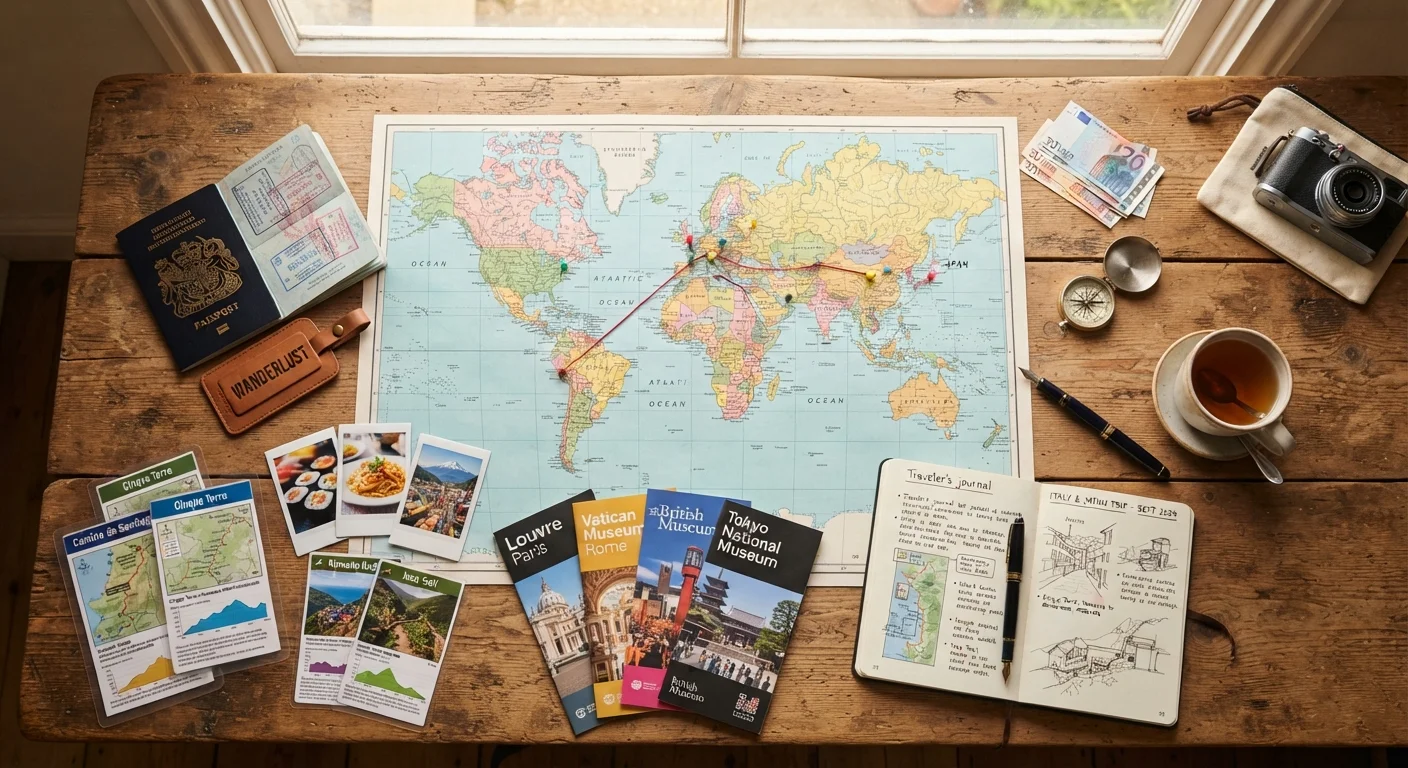
Why a Theme Makes Trip Planning Easier
Most travel frustration starts the same way: an overwhelming list of things to do with no clear filter for what actually belongs on the itinerary. A trip theme solves that problem before it starts. When you know your journey is centered on, say, regional cuisine or Civil War history, every decision — destination, neighborhood, day structure, accommodation type — has a natural reference point.
Themes also do something subtler: they create a shared vocabulary for travel companions. If everyone agrees the trip is a nature-first experience, it's easier to explain why a museum afternoon gets deprioritized in favor of a longer trail. For solo travelers, a theme keeps research focused and prevents the rabbit hole of endless options. See our solo travel planning guide for how this dynamic plays out differently when you're on your own.
Below, each of the four most common themes — culture, nature, food, and history — gets its own breakdown: what it shapes, what to watch for, and how to plan around it effectively.
Culture: Let the Living Traditions Lead
A culture-themed trip centers on how people live — their arts, festivals, architecture, music, and daily rhythms. This theme works best when you resist the urge to simply visit famous landmarks and instead seek out places where local life is actively on display.
Practically, this means researching the destination's event calendar early. Festivals, gallery openings, local markets, and performing arts seasons have fixed dates and limited capacity. If you're building an itinerary around a specific cultural event, that date anchors everything else. The Destinations & Experiences hub is a useful starting point for identifying culturally rich locations across the US.
Neighborhood choice matters enormously for culture trips. Staying in or near historically significant or creatively active neighborhoods — rather than a generic hotel district — gives you access to galleries, independent venues, and community spaces that rarely appear on mainstream lists. Budget a few unscheduled hours each day; some of the best cultural encounters are unplanned.
A culture trip rewards travelers who seek living traditions, not just landmark photos.
Nature: Build Around Conditions, Not Convenience
Nature-themed travel is uniquely governed by forces outside your control: weather windows, migration seasons, trail conditions, permit systems, and daylight hours. The most common mistake is planning a nature trip around flight prices rather than peak natural conditions at the destination.
Start by identifying the natural phenomenon you most want to experience — wildflower bloom, fall foliage, whale migration, clear-sky stargazing — and work backward from the optimal window for that event. Many national parks and wilderness areas now require timed-entry permits or trailhead reservations that must be secured weeks or months in advance; check official sources before committing to dates.
Pacing differs on nature trips, too. Long hikes, early morning light, and weather contingencies all argue for shorter daily itineraries with built-in buffer time. Consider proximity to travel safety and wellness resources when planning remote or strenuous outdoor segments, particularly if your group includes varying fitness levels.
Build your nature itinerary around natural conditions first — then fit logistics around that window.
Food: Research Deeply, Reserve Early
Food travel has evolved well beyond restaurant-hopping. A food-themed trip might include a farmers' market circuit, a regional ingredient trail, a hands-on cooking class, a winery or brewery visit, or a deep dive into a specific culinary tradition. The theme is flexible, but it demands more pre-trip research than almost any other.
The key logistics challenge is reservation lead time. Highly regarded dining rooms in food-destination cities — think Charleston, San Francisco, New Orleans, or Portland — may require reservations weeks to months out. Build your must-do meals into the itinerary first, then fill the schedule around them rather than treating reservations as an afterthought.
Beyond restaurants, food trips benefit from talking to locals. Farmers' market vendors, butchers, and neighborhood café owners often point travelers toward regional specialties and hidden gems that no guide covers. Reading up on how experienced travelers approach destination research can help here — our guide on trip research habits offers practical sourcing strategies that apply directly to food-focused planning.
Lock in your must-do reservations first — food trips are only as good as their advance planning.
History: Front-Load the Context
History-themed travel is uniquely rewarding for travelers who arrive informed. Standing at a Civil Rights landmark, a Revolutionary War battlefield, or a preserved Indigenous site means something very different when you understand the events that unfolded there. The single most effective thing you can do before a history trip is read — one or two solid books or long-form articles on the period or place you're visiting.
This theme also benefits from sequencing. Where possible, arrange sites chronologically or thematically rather than purely by geography. Visiting a colonial settlement before the revolutionary-era statehouse, for instance, builds a narrative that makes each stop richer than it would be in isolation.
History trips often include sites with limited hours, periodic closures, or guided-only access — especially living history museums and archaeological preserves. Verify operating hours directly with each site before finalizing your schedule, and factor in travel time between sites, which is frequently underestimated. Destinations that blend history with other textures — local architecture, traditional food, regional character — are explored in our small-town vs. major cities guide.
Travelers who arrive at history sites with context absorb far more than those who arrive cold.
Choosing Your Theme: A Practical Starting Point
If you're unsure which theme fits your next trip, ask yourself one question: What do I most want to feel at the end of this journey? Inspired by human creativity? Restored by open space? Delighted by flavor? Connected to the past? The answer usually points directly to a theme.
From there, test the theme against your travel group's collective appetite, your available time, and the destination's genuine strengths. Some places are extraordinary food destinations but thin on natural drama; others have deep history but limited dining infrastructure. Matching your theme to a destination that authentically supports it — rather than forcing a theme onto a destination — is the foundation of a trip that delivers.
It's also worth considering how much structure you want. History and food trips typically require the most advance planning; nature and culture trips can absorb more spontaneity. For a broader look at that planning-versus-flexibility trade-off, our guide on over-planning is a useful companion read.
The best theme is the one that matches both your emotional goals and your destination's authentic strengths.
Blending Themes and Building a Realistic Itinerary
Most great trips touch more than one theme, and that's not a problem — the goal isn't purity, it's clarity. Designate a primary theme and let the others play supporting roles. A food-first trip through New Orleans can still include a cemetery walking tour; the history just doesn't drive the schedule.
Test Your Theme Against the Destination
Before committing to a theme, spend 20 minutes researching whether your chosen destination genuinely supports it. A city renowned for street food culture may offer little in the way of wilderness access, and vice versa. Choosing a destination that authentically excels at your theme — rather than merely offers it — dramatically improves the experience. Official tourism boards, travel journalism, and destination-specific forums are good early filters.
How much structure your theme requires also depends on your travel style. Food and culture trips typically demand more advance booking; nature trips often reward flexibility. Our guide to fixed-date vs. open-ended travel explores that trade-off in depth. And if you're coordinating with a group, a shared theme is one of the most practical alignment tools available — visit our group trip coordination guide for tips on keeping everyone engaged once the theme is set.
Whatever theme you choose, the payoff is the same: a trip that feels intentional rather than accidental, and memories that form a coherent story rather than a random highlight reel.
The content on this site is for informational purposes only and is not a substitute for professional advice. Always consult a qualified professional for guidance specific to your situation.