

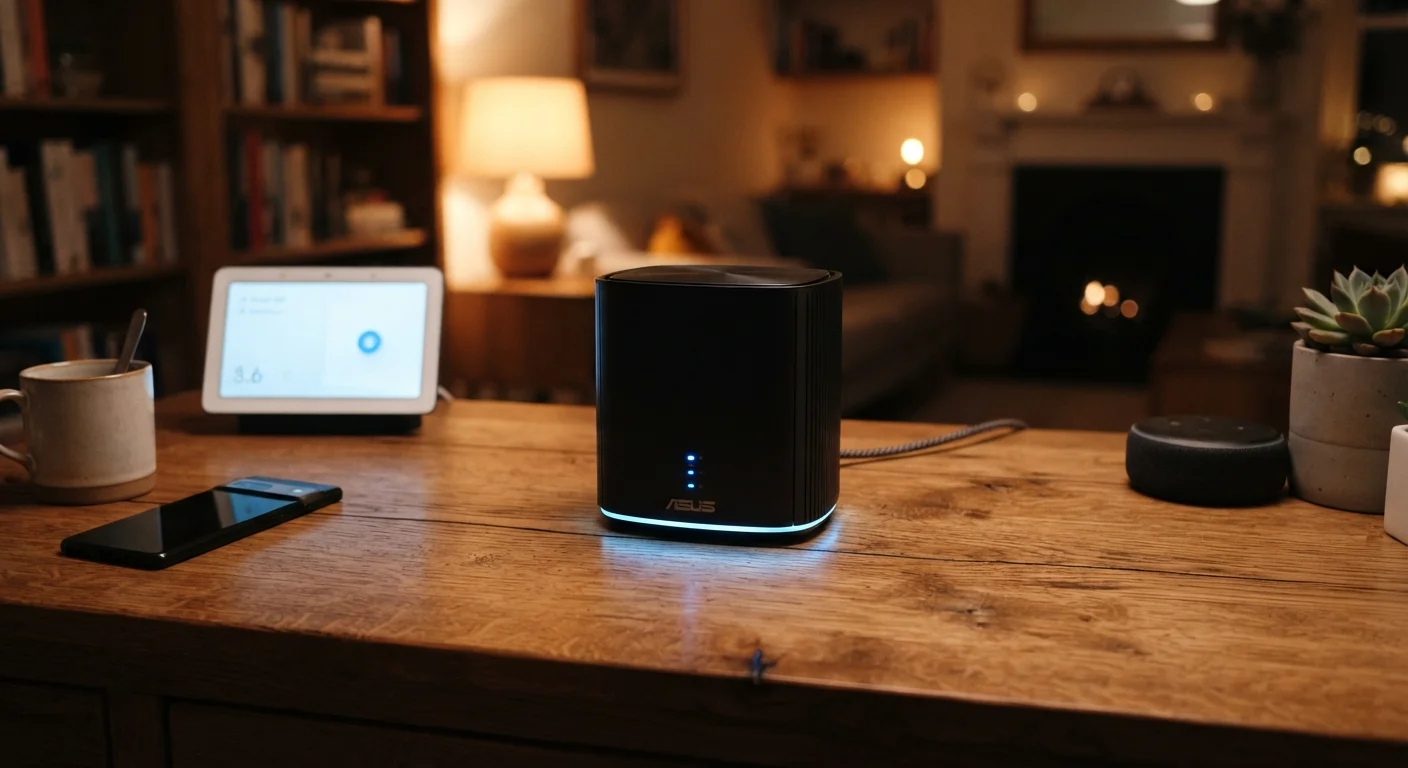
Why Your Home Network Is a Target
Most people set up a home router once and never revisit its settings. That's understandable — it works, so why touch it? But routers running factory-default credentials, outdated firmware, or weak encryption can be discovered and probed by automated scanning tools without anyone physically near your home.
A compromised home network can expose every device on it: laptops, phones, smart speakers, and security cameras alike. Attackers who gain access may intercept unencrypted traffic, redirect your browsing, or use your connection as a launching point for other activity. The good news is that the most impactful protections involve settings changes, not hardware replacements.
If you want a broader view of your digital exposure beyond the router, the Internet Privacy Audit checklist walks through passwords, app permissions, and browser settings in a single review session.
Web browser
Used to access your router's admin interface by entering its IP address into the address bar.
Password manager
Helps generate and securely store strong, unique passwords for your router admin panel and Wi-Fi network.
Router manual or manufacturer's support page
Provides model-specific instructions for navigating your router's settings menus.
Step-by-Step: Securing Your Router
The steps below cover the most consequential settings on a typical home router. The exact menu names will vary by manufacturer, but the options described exist in some form on almost all current consumer routers.
What you will need
Log in to your router's admin panel
Open a browser on a device connected to your home network and type your router's IP address into the address bar. Common addresses are 192.168.1.1 or 192.168.0.1 — check the label on the back of your router if neither works. Enter the admin username and password when prompted.
Change the router admin username and password
Navigate to the administration or management section of your router's interface. Replace the default username and password with strong, unique credentials. A strong password is at least 12 characters and mixes letters, numbers, and symbols. Do not reuse a password from another account.
Update your Wi-Fi password and network name (SSID)
Under the wireless settings section, change your network name (called an SSID) to something that doesn't identify you, your address, or your router model. Then set a new Wi-Fi password — use something long and random rather than a memorable phrase. Apply changes and reconnect your devices.
Switch to WPA3 encryption (or WPA2 if WPA3 isn't available)
In your wireless security settings, look for the encryption or security mode option. Select WPA3 if your router supports it — it's the current standard and the most resistant to password-guessing attacks. If your router doesn't offer WPA3, choose WPA2-AES. Avoid WEP and WPA (original) entirely, as both are considered broken.
Enable a separate guest network for smart home devices
Most modern routers let you create a secondary guest network. Use this to connect smart TVs, thermostats, cameras, and other IoT (Internet of Things) devices — meaning devices that connect to the internet but aren't traditional computers. Keeping these on a separate network limits what an attacker can reach if one of those devices is compromised.
Disable WPS and remote management
WPS (Wi-Fi Protected Setup) is a feature designed to make connecting devices easier, but it has known security weaknesses. In your router settings, locate the WPS option and turn it off. Similarly, find the remote management or remote access setting — which allows your router to be administered from outside your home network — and disable it unless you have a specific need for it.
Check for and install firmware updates
Router firmware (the software running on your router) receives updates that patch known security vulnerabilities. In your admin panel, look for a firmware or software update section. Install any available updates and, if your router supports it, enable automatic updates going forward.
Default Credentials Must Be Changed
Factory-default router usernames and passwords are listed in publicly available databases organized by router model. If yours haven't been changed, anyone who identifies your router model — visible in an SSID or through network scanning — can look up those credentials and attempt to log in. Change both the admin password and your Wi-Fi password before doing anything else.
Once you've worked through these steps, your network will be significantly harder to access without authorization. For context on how home network risks compare to what you encounter away from home, see our look at when public Wi-Fi is genuinely risky.
Keeping Your Network Secure Over Time
Locking down your router is not a one-time event. New vulnerabilities are discovered regularly, and firmware updates are the main mechanism manufacturers use to address them. Checking for updates every few months takes minutes and removes known risks.
It's also worth reviewing which devices are connected to your network periodically. Most router admin panels include a connected devices list. Unfamiliar entries are worth investigating — they may be a device you forgot about, or something that shouldn't be there.
Review Connected Devices Regularly
Your router's admin panel typically lists every device currently connected to your network. Make a habit of scanning this list every month or two. If you spot a device you don't recognize, change your Wi-Fi password and reconnect only your known devices — this effectively evicts any unauthorized connection.
Strong network security also depends on strong account and device security. The full picture of account security — including two-factor authentication — reinforces everything you've done at the router level. And if you're setting up a new device to connect to your newly secured network, what most people skip in the first hour of device setup is worth a read before you proceed.
The content on this site is for informational purposes only and is not a substitute for professional advice. Always consult a qualified professional for guidance specific to your situation.