

What Positive Reinforcement Actually Means
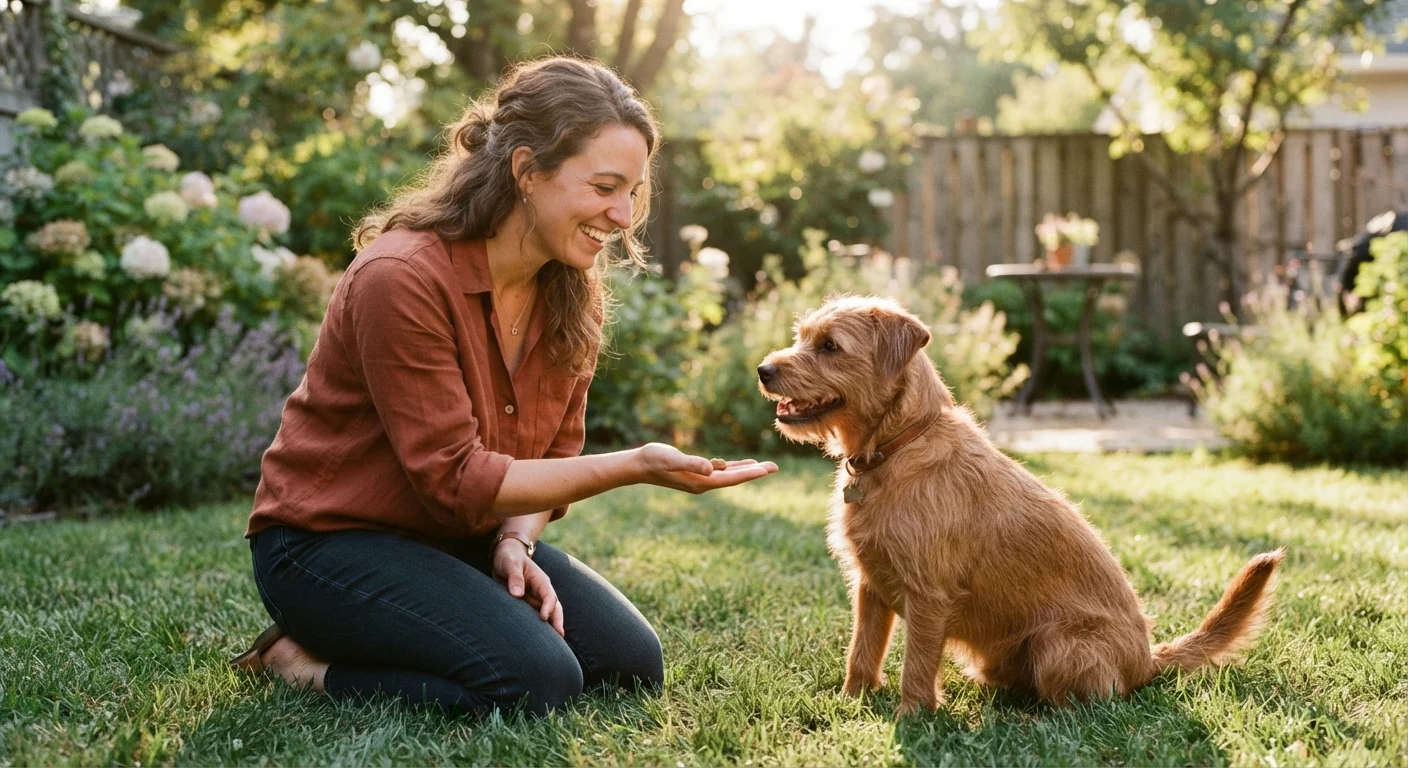
Positive reinforcement is a principle rooted in behavioral science: when a behavior is followed by something the animal finds rewarding, that behavior becomes more likely to happen again. It sounds simple, and conceptually it is — but applying it well requires understanding a few foundational ideas.
The word "positive" here doesn't mean pleasant or kind in the everyday sense. It means adding something. A reward — whether food, play, praise, or access to something the animal wants — is added immediately after the desired behavior. The animal's brain begins to associate the two, and over time, the behavior strengthens.
This is distinct from punishment, which involves adding something aversive or removing something desirable to discourage behavior. As explored in why punishment-based training often backfires, aversive methods frequently suppress behavior without addressing its underlying cause — and can erode trust in the process.
Understanding how your pet perceives and processes their environment is key to applying these principles well. Our guide to how pets think and act provides helpful context for what follows.
Core Practices for Reward-Based Training
The practices below reflect established guidance from animal behaviorists and veterinary professionals. They apply broadly — to dogs, cats, birds, small mammals, and beyond — though the specifics of delivery will vary by species.
Deliver the reward within two seconds of the desired behavior
Animals associate outcomes with whatever happened most immediately before them. A delayed reward risks reinforcing the wrong behavior — whatever the animal was doing at the moment of delivery. Tight timing is especially critical when first establishing a new behavior.
Use a reward your specific animal actually values
Reinforcement only works if the animal finds it reinforcing. Food is highly motivating for many animals, but the type matters — what works for one dog may not interest another. For some species or individuals, play, physical affection, or access to a preferred space may be more effective than food.
Keep sessions short and end before the animal disengages
Most animals learn better in brief, focused intervals than in long sessions. Fatigue and frustration reduce learning efficiency and can create negative associations with the training context. Ending while engagement is still high leaves the animal more willing to participate next time.
Be consistent across all family members and environments
Inconsistency is one of the most common reasons training stalls. If one household member rewards a behavior that another ignores or discourages, the animal receives conflicting signals that slow learning and create confusion.
Gradually raise criteria as behaviors become reliable
Once an animal performs a behavior consistently in one context, the expectation can be slowly increased — longer duration, greater distraction, new environments. Raising criteria too quickly leads to failure and can undermine the animal's confidence. A principle sometimes called 'shaping' involves reinforcing successive approximations toward the target behavior.
Recognize and reward calm, default behaviors — not just cued ones
Training isn't only about commands. Noticing and reinforcing moments when your pet is naturally calm, settled, or making a good choice — without being asked — powerfully shapes day-to-day behavior. This builds an animal that defaults to relaxed, desirable states rather than one that only behaves when prompted.
Starting Strong: Quick Wins You Can Apply Today
You don't need a structured curriculum to begin. A few small, consistent actions can shift how your pet responds to you and begin building the habits you want. The following actions are low-effort and high-impact starting points.
Use a Marker Signal to Bridge the Gap
A short, consistent marker — a clicker, a word like 'yes,' or a brief sound — tells the animal the exact moment they did the right thing, even if the reward takes a second to deliver. This bridges the timing gap and accelerates learning. Introduce the marker by pairing it with a reward several times before using it in training.
Reinforcement as a Foundation for Wellbeing
Training isn't separate from care — it's part of it. Pets that understand what's expected of them, and who experience predictable, positive interactions with their owners, tend to show lower stress indicators and more relaxed behavioral profiles. The relationship built through consistent reward-based interaction supports broader wellbeing.
“The best way to deal with an animal's problematic behavior is to ask what you want the animal to do instead, and then teach that. Behavior is always serving a function for the animal.”
— Karen Overall, Board-certified veterinary behaviorist and author of works on clinical behavioral medicine for small animals
These habits slot naturally into the kind of everyday routines described in our article on daily habits that make a lasting difference to a pet's wellbeing. Training moments — asking for a sit before a meal, rewarding calm behavior during grooming — become woven into the day without requiring separate sessions.
For a broader view of how these practices support overall health, the Pet Health & Wellness hub and Pet Care Basics hub offer complementary guidance across species and life stages.
This article is for general informational and educational purposes. For concerns about your pet's health or behavior, consult a licensed veterinarian or certified animal behaviorist.
The content on this site is for informational purposes only and is not a substitute for professional advice. Always consult a qualified professional for guidance specific to your situation.