

Option A
Aggression in Dogs
A behavioral strategy aimed at increasing distance or controlling a threat.
Best for: Understanding when a dog is using offensive or territorial displays to assert control over a situation or resource.
Option B
Fear in Dogs
An emotional state that drives avoidance, shutdown, or defensive reaction.
Best for: Recognizing when a dog's difficult behavior stems from anxiety, past trauma, or feeling cornered rather than from dominance.
Why the Distinction Matters
Owners frequently describe their dogs as "aggressive" when the behavior they're witnessing may be rooted in fear — and vice versa. This confusion is understandable. A growl sounds the same regardless of cause, and a snap can feel equally alarming whether it comes from a terrified animal or a confident one asserting control. But treating fear as aggression, or aggression as fear, can make the problem worse and put people at risk.
Aggression in dogs generally refers to behaviors intended to increase the dog's control over a situation — threatening displays, resource guarding, or predatory behavior. Fear, by contrast, is an emotional state; when a dog cannot escape something frightening, fear can escalate into defensive aggression. That's the overlap that causes confusion. The behavior (growling, snapping) may look identical, but the emotional driver behind it shapes everything about how you should respond.
For owners navigating this, understanding behavioral changes that signal distress is a useful starting point before drawing conclusions.
Reading the Body Language Differences
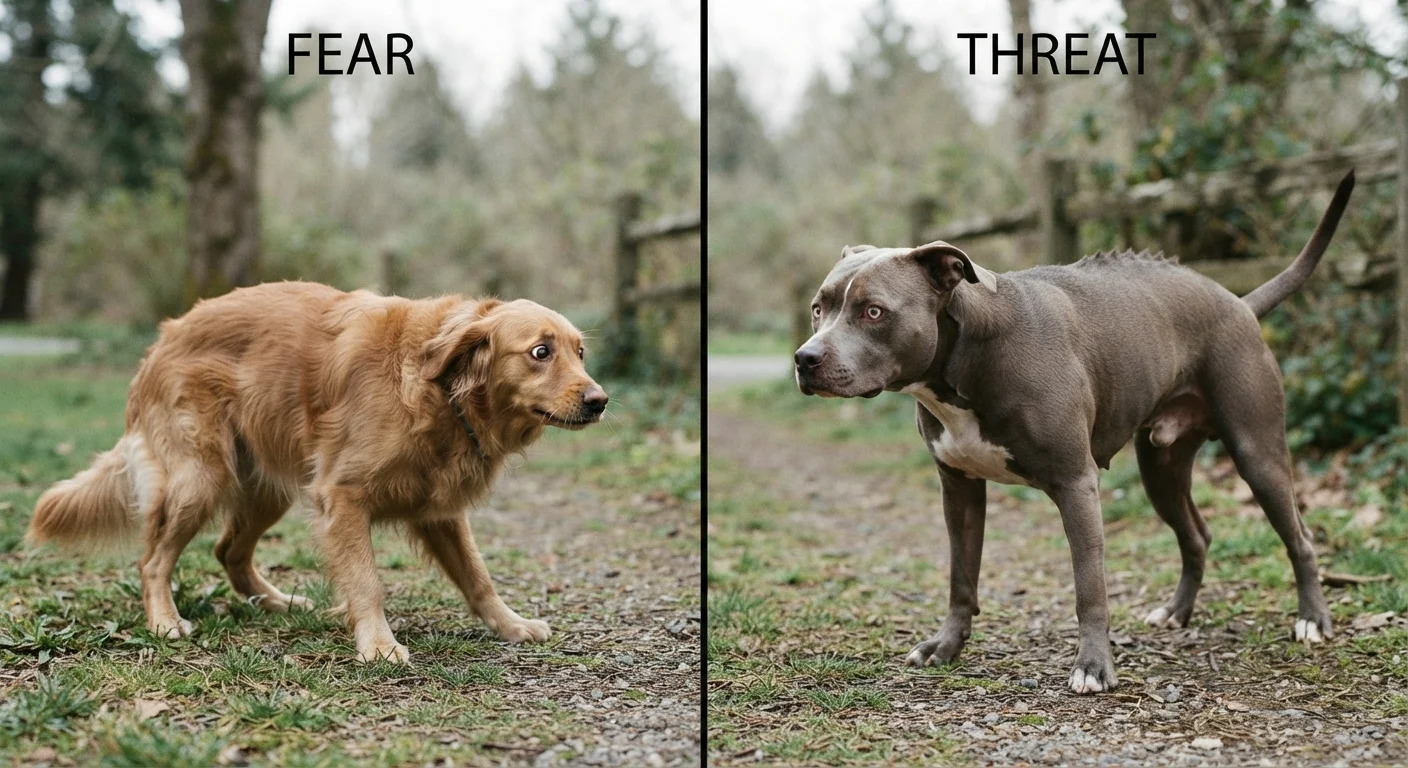
Body posture is often the clearest indicator of what's driving a dog's behavior. Dogs operating from confidence or offensive aggression typically display a forward, upright posture — weight shifted toward the front, tail held high, ears forward, and direct eye contact. These dogs are moving toward a perceived threat or resource.
Fearful dogs tend to display the opposite: weight shifted back or low, tail tucked or held low, ears flattened, body crouched, and gaze averted or wide-eyed (showing whites of the eyes, sometimes called "whale eye"). A fearful dog that growls or snaps is doing so because it perceives no other option — it has been pushed past its threshold and cannot retreat.
| Criterion | Aggression | Fear |
|---|---|---|
| Primary driver | Control, resource, or territory | Perceived threat, no escape route |
| Body posture | Forward, upright, tense | Low, crouched, retreating |
| Eye contact | Direct, hard stare | Averted or wide (whale eye) |
| Tail position | High or stiffly raised | Tucked or held very low |
| Direction of movement | Toward the threat | Away from or frozen |
| Common triggers | Food, space, unfamiliar dogs | Strangers, restraint, loud noises |
| Bite risk if pushed | High — escalates with pressure | High — defensive last resort |
| Response to punishment | Can escalate or redirect | Removes warning signals, worsens fear |
This distinction matters because a fearful dog that is punished for growling may stop growling — but the fear doesn't disappear. The dog loses its warning signal and becomes more likely to bite without warning. Suppressing the symptom without addressing the underlying emotional state is one of the most common and consequential mistakes owners make.
Common Causes and Contexts
True offensive aggression in dogs can stem from resource guarding (food, toys, space, people), territorial behavior, predatory drive, or — importantly — pain and medical conditions. A dog that was never aggressive before and suddenly snaps may be reacting to physical discomfort rather than a behavioral problem. Veterinary evaluation is always warranted before assuming a behavioral cause.
Fear, on the other hand, frequently traces back to insufficient socialization during the critical developmental window (roughly 3 to 14 weeks of age), past aversive experiences, or genetic predisposition toward anxiety. Dogs that were isolated, abused, or inconsistently handled often develop generalized fear responses that can look explosive when triggered. Separation anxiety is one well-known fear-based condition, but fear can also manifest around strangers, handling, loud noises, or unfamiliar environments.
Pain Can Mimic Both Fear and Aggression
A dog that suddenly begins growling, snapping, or shying away from touch may be responding to physical pain rather than a behavioral problem. Conditions like arthritis, dental disease, or internal discomfort can trigger what looks like aggression or fearfulness. Always consult a veterinarian to rule out a medical cause before beginning any behavior modification program.
If you're working with a shy or fearful animal specifically, evidence-informed steps for building confidence at home can provide structured guidance.
How Responses Differ — and Why Both Need Professional Help
For fear-based behavior, the general therapeutic direction involves reducing pressure, creating predictability, and using positive reinforcement to build new associations with previously frightening stimuli — a process called counter-conditioning and desensitization. The goal is to change how the dog feels about the trigger, not just suppress the behavior.
For offensive aggression, management — preventing access to triggers — is often the first priority, followed by a structured behavior modification program designed by a certified professional. Attempting to "dominate" or physically correct an aggressive dog is not supported by behavioral science and carries real safety risks.
~77%
Dog bites involving familiar dogs
The American Veterinary Medical Association estimates the majority of dog bites involve dogs known to the victim, underscoring that context and relationship matter more than breed alone.
3–14 weeks
Critical socialization window in dogs
Behavioral science identifies this developmental period as when positive exposure to people, animals, and environments most effectively shapes a dog's long-term fear responses.
~50%
Aggressive cases with a fear component
Veterinary behaviorists commonly observe that a substantial proportion of dogs referred for aggression have fear or anxiety as a significant contributing factor.
In both cases, working with a certified applied animal behaviorist (CAAB) or a veterinary behaviorist (Dip ACVB) is strongly advisable. These professionals can conduct a thorough behavior history, identify whether medical factors are involved, and build a plan appropriate to the dog's specific profile. Dogs are social animals with complex emotional lives — understanding those complexities, as explored in our look at social versus solitary species, underscores why one-size-fits-all responses rarely work.
This article is for general informational purposes only and does not constitute veterinary or professional behavioral advice. If your dog is displaying aggressive or fearful behavior, consult a licensed veterinarian or certified animal behaviorist for an individualized assessment.
The content on this site is for informational purposes only and is not a substitute for professional advice. Always consult a qualified professional for guidance specific to your situation.