

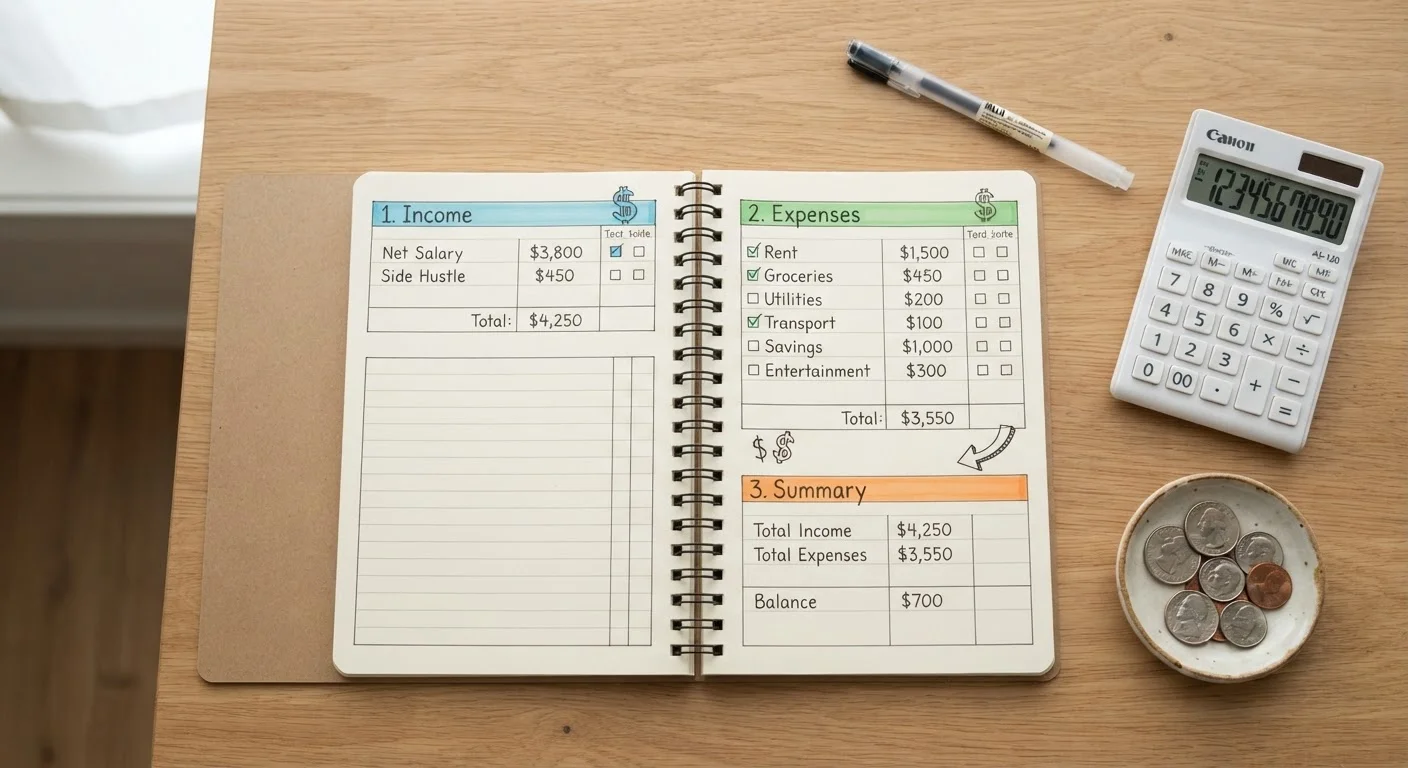
How the Three Categories Work
The power of the 50/30/20 rule comes from its simplicity. Instead of building a line-item budget for dozens of expense categories, you sort every dollar you spend into one of three buckets. Here is what goes into each:
50% — Needs
Needs are non-negotiable monthly expenses: rent or mortgage, basic groceries, utilities, minimum loan payments, health insurance, and transportation required to earn income. The test is straightforward — if skipping the expense would directly threaten your housing, health, or employment, it is a need.
30% — Wants
Wants are lifestyle choices: dining out, subscriptions, travel, hobbies, gym memberships, and clothing beyond the basics. These expenses improve quality of life but are not strictly required. The 30% allocation is intentional — it acknowledges that a sustainable budget must leave room for enjoyment, not just survival.
20% — Savings and Debt Repayment
This bucket covers your financial future: building an emergency fund, contributing to a retirement account such as a 401(k) or IRA, and making payments above the required minimum on debts. Directing 20% here consistently — even in modest amounts — lays the groundwork for long-term financial stability.
Start With One Month of Real Spending Data
Before applying the 50/30/20 percentages, pull your last month's bank and credit card statements and categorize each transaction as a need, want, or savings contribution. Seeing where your money actually went — rather than where you think it went — gives the framework an honest foundation to build on.
This article is for general informational and educational purposes only and does not constitute personalized financial advice. Consult a qualified financial professional for guidance specific to your circumstances.
Applying the Rule to Your Paycheck
Start with your monthly after-tax income. If your take-home pay varies, use a conservative monthly average. Then multiply:
- 50% needs: Monthly take-home × 0.50
- 30% wants: Monthly take-home × 0.30
- 20% savings/debt: Monthly take-home × 0.20
Compare those targets against your actual spending from last month. Most people find their needs are close to target but their wants have quietly crept above 30%. That awareness alone — without overhauling every habit — is a meaningful first step.
~34%
Average share of income spent on housing by US renters
According to the U.S. Bureau of Labor Statistics Consumer Expenditure Survey, housing routinely consumes the largest share of household budgets, often pushing the needs category above the 50% guideline for renters in high-cost markets.
Less than $1,000
Emergency savings held by many US households
Federal Reserve surveys have found that a significant share of US adults would struggle to cover an unexpected $400–$1,000 expense, underscoring why the 20% savings allocation is a critical component of the framework.
3–6 months
Recommended emergency fund coverage
Most financial planning organizations recommend maintaining three to six months of essential living expenses in an accessible savings account as a baseline financial cushion.
Once you have your numbers, the next step is building a budget you can maintain over time. Our guide to building a budget you'll actually stick to covers the practical habits that help the framework take root.
When the Standard Percentages Don't Fit
The 50/30/20 rule is a starting point, not a universal prescription. Several situations call for adjustment:
- High housing costs: In many US cities, rent alone can exceed 30–35% of take-home pay. If your needs genuinely surpass 50%, scale back wants rather than savings where possible.
- Low income: When income is tight, covering needs may leave little room for the other two categories. Focus first on meeting essentials and building even a small emergency cushion before optimizing the split.
- Aggressive debt payoff goals: If you are working through high-interest credit card debt, temporarily shifting more than 20% toward repayment — and reducing wants proportionally — is a reasonable trade-off.
- Shared households: Couples and roommates may need to reconcile two incomes and different spending styles before applying the percentages. Our guide to splitting finances in a shared household walks through common models.
Needs vs. Wants: A Common Gray Area
Some expenses feel essential but are actually upgrades — a premium phone plan versus a basic one, for example, or a larger apartment than strictly necessary. When categorizing, ask whether a lower-cost alternative could meet the same core need. If yes, the upgrade portion belongs in wants, not needs. This distinction often reveals hidden room in the budget.
For a broader look at how this rule fits within a complete personal finance strategy, see Personal Budgeting From the Ground Up, which covers everything from calculating income to adjusting your plan as life changes.
Reviewing and Refining Over Time
No budget stays accurate for long. Income changes, expenses shift, and goals evolve. The 50/30/20 rule works best when you treat it as a living structure, not a set-it-and-forget-it plan. A brief monthly check-in — comparing actual spending against your three targets — keeps the framework honest.
Use a monthly budget review checklist to spot patterns and catch small leaks before they compound. Small, consistent adjustments outperform dramatic overhauls that are hard to sustain. The 50/30/20 rule's value is that it makes those adjustments visible: if wants exceed 30%, you know exactly where to look.
Frequently Asked Questions
It uses after-tax income — the amount that actually lands in your bank account each pay period. If you receive a paycheck with taxes already withheld, that net figure is your starting point. Self-employed individuals should subtract estimated taxes before applying the percentages.
Needs are expenses you genuinely cannot avoid: rent or mortgage payments, basic groceries, utilities, transportation required for work, health insurance premiums, and minimum payments on debts. Upgrades or optional enhancements — like a premium streaming package or dining out — fall under wants, not needs.
Many people in high-cost cities find that housing alone consumes more than 50% of take-home pay. In that case, trim the wants category first before touching savings. The framework is a guide, not a strict rule — what matters is that you are intentionally allocating money toward all three areas.
Yes, partly. Minimum debt payments are counted under needs (50%), while any extra payments you make above the minimum fall under the 20% savings and debt-repayment bucket. Paying more than the minimum accelerates payoff and reduces total interest paid over time.
The 50/30/20 rule offers broad categories and simplicity, making it easier to start. Zero-based budgeting assigns every dollar a specific job each month, which gives more precision but requires more time and tracking. See our <a href="/money-finance/budgeting-basics/zero-based-budgeting-vs-the-503020-rule-which-framework-fits-your-life">comparison of both methods</a> to decide which suits your habits.
Yes, though it requires agreement on how to handle shared expenses. Each person can apply the rule to their own income, or the household can pool income and apply the percentages to the combined total. Combining the framework with a clear system for splitting costs helps avoid confusion.
The content on this site is for informational purposes only and is not a substitute for professional advice. Always consult a qualified professional for guidance specific to your situation.