

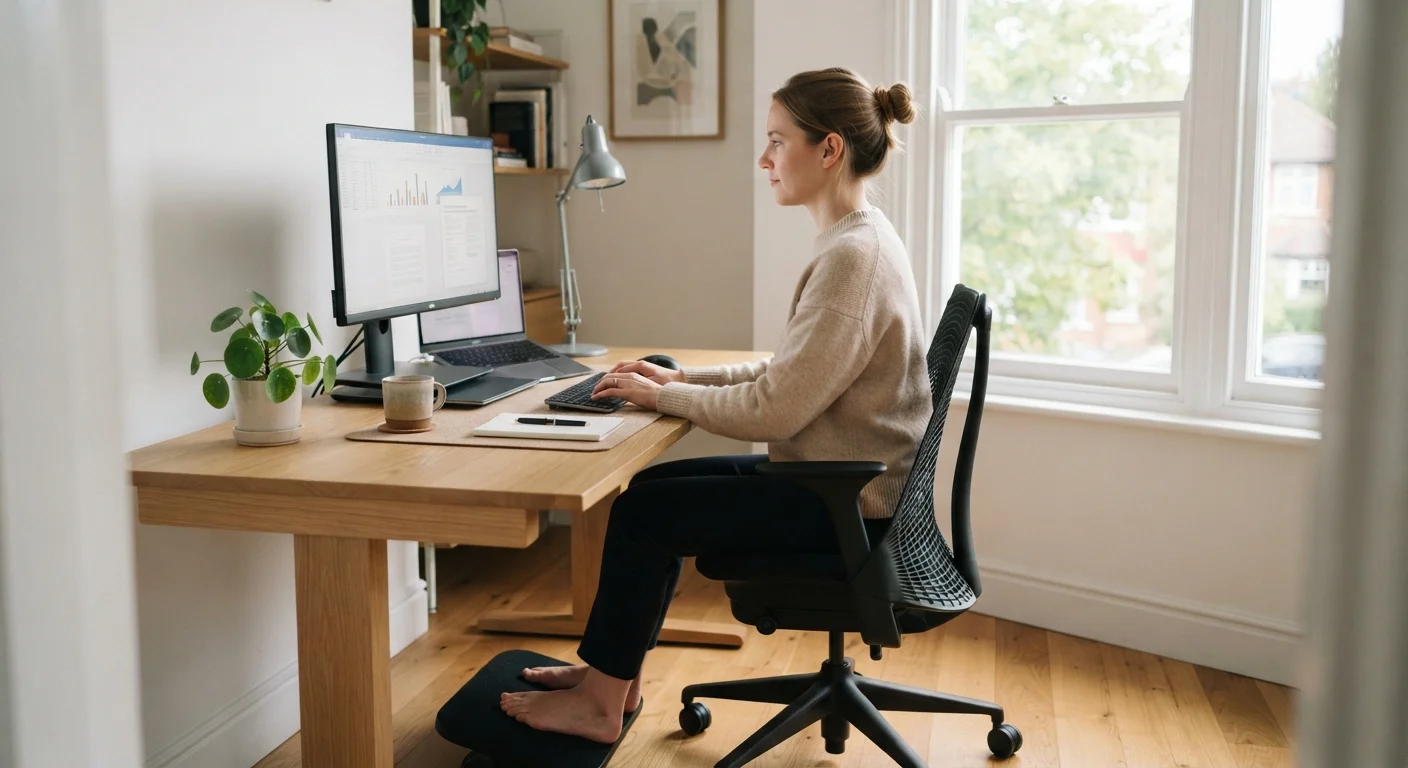
What Prolonged Sitting Does to the Body
The human body is built for varied movement, not sustained stillness. When sitting for extended periods, several physiological changes accumulate gradually. The muscles that support the spine — particularly in the lower back, hips, and core — can weaken or become tight when they are held in the same position for hours. The hip flexors, in particular, tend to shorten with chronic sitting, which can alter how the pelvis is positioned and increase load on the lumbar spine.
Beyond musculoskeletal effects, prolonged sitting is associated in population-level research with changes in blood sugar regulation, circulation, and metabolic function. These associations do not mean that sitting causes disease in any simple one-to-one way, but they do suggest that the body benefits from regular interruptions to stillness. As part of a broader approach to preventive health habits, reducing unbroken sitting time is a reasonable and accessible goal for most adults.
6–8 hrs
Average daily sitting time for U.S. adults
Estimates from national health surveys suggest many American adults spend the majority of their waking day seated, much of it during work hours.
~30 min
Recommended maximum unbroken sitting interval
Many occupational health bodies suggest standing or moving briefly at least every 30–60 minutes to interrupt prolonged sedentary periods.
Lower back pain
Leading musculoskeletal complaint among desk workers
Lower back pain is widely reported as one of the most common work-related physical complaints among adults in office or desk-based roles.
What Good Posture Actually Means
Posture is often described as a fixed ideal — sit up straight, shoulders back, chin tucked. In practice, posture science has evolved. Contemporary guidance from physical therapists and ergonomists emphasizes that posture is dynamic: the goal is not to maintain one perfect position indefinitely, but to move through a range of supported positions throughout the day.
That said, certain alignment principles provide a useful baseline. When seated, a neutral spine — one that maintains its natural gentle curves rather than collapsing or over-arching — reduces the mechanical load on spinal discs and surrounding soft tissue. Monitor height, chair depth, and keyboard position all influence how easily the body can maintain this alignment without effortful muscular tension.
Adjust Your Workspace Before Your Habits
Before attempting to change behavior, spend a few minutes assessing your desk setup. Your monitor should sit at or just below eye level, your forearms roughly parallel to the floor when typing, and your feet flat on the ground or supported. These adjustments make it easier for your body to settle into a lower-tension position without constant muscular effort — reducing fatigue over the course of a day.
Ergonomic equipment can support better positioning, but it addresses only part of the picture. Even a well-configured workstation does not replace the need for regular movement breaks.
Building Movement Into a Desk-Based Day
The practical challenge for most desk workers is not understanding that movement is beneficial — it is making movement happen consistently within the structure of a busy workday. A few approaches tend to work better than relying on willpower alone.
- Scheduled micro-breaks: Setting a recurring reminder every 45–60 minutes to stand, stretch, or walk briefly creates a reliable external prompt.
- Habit stacking: Attaching movement to existing routines — standing during phone calls, walking to a colleague rather than messaging, doing a short stretch at the start of a lunch break — reduces the friction of starting new behaviors.
- Workspace design: Keeping a water bottle at a distance that requires standing to refill, or positioning a printer slightly away from the desk, introduces incidental movement without conscious effort.
For those looking to go further, building a structured weekly movement plan can complement these in-workday habits with more deliberate physical activity across the week. It is also worth understanding what current physical activity guidelines recommend for adults overall.
When to Seek Professional Guidance
General ergonomic principles and movement habits are useful starting points, but they are not substitutes for professional assessment when symptoms are present. Persistent neck or back pain, recurring headaches linked to screen use, radiating pain, numbness or tingling, or any sudden worsening of musculoskeletal symptoms should prompt a conversation with a qualified healthcare professional.
A physiotherapist or occupational health specialist can evaluate individual posture, movement patterns, and workstation setup in ways that generalized advice cannot. If you want to raise posture or activity concerns during a routine medical appointment, strategies for making the most of limited appointment time can help ensure the conversation is productive.
“The chair is not the enemy — it is the unbroken hours in the chair that accumulate into risk. Movement distributed across the day, in whatever form is realistic, is more protective than any single piece of furniture.”
— Occupational Health Research Perspective, Synthesized from published occupational health literature on sedentary behavior and workplace wellness
This article is for general informational purposes only and does not constitute medical advice. If you have concerns about pain, posture-related symptoms, or your physical health, please consult a qualified healthcare professional.
Frequently Asked Questions
Most health guidance suggests breaking prolonged sitting every 30 to 60 minutes. Brief interruptions — even standing or walking for a few minutes — help counteract some of the physiological effects of uninterrupted sitting. There is no single universally agreed threshold, but shorter intervals of sitting are broadly considered better.
Research suggests that structured exercise partially offsets the risks of prolonged sitting, but does not eliminate them entirely. Experts often describe this as the problem of being "active but sedentary" — meeting weekly exercise targets while still sitting for the majority of waking hours. Distributing movement throughout the day matters alongside any dedicated workouts.
A general starting point includes feet flat on the floor, knees at roughly a 90-degree angle, lower back supported, monitor at or slightly below eye level, and shoulders relaxed. However, posture experts increasingly emphasize that the best posture is a changing posture — no single position should be held rigidly for hours.
Standing desks reduce sitting time but introduce their own risks — prolonged standing can cause lower limb discomfort and fatigue. The most effective approach combines sitting, standing, and moving throughout the day rather than simply swapping one static posture for another.
If you experience persistent back, neck, or joint pain, numbness or tingling in limbs, or pain that interferes with daily function, it is worth consulting a qualified healthcare professional. These symptoms can have multiple causes, and a clinician can help identify the right approach for your specific situation.
The content on this site is for informational purposes only and is not a substitute for professional advice. Always consult a qualified professional for guidance specific to your situation.